
Dental
Dental Bridges
Filling the gap left by missing teeth.
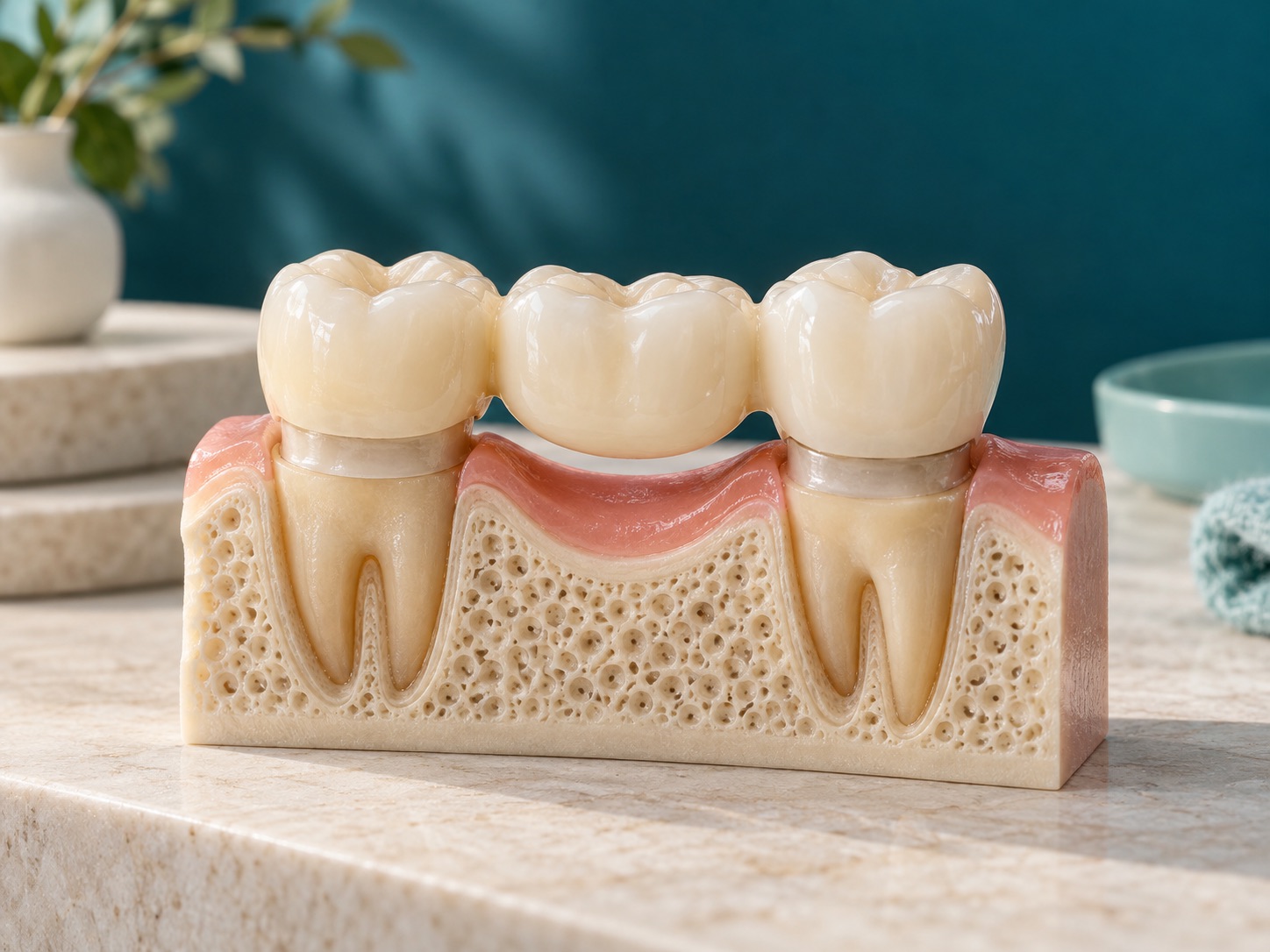
A dental bridge replaces one or more missing teeth with artificial teeth fixed to crowns on the neighbouring teeth or on implants. It is cemented in place and is not removed by the patient.
Treatment overview
A tooth-supported bridge requires preparing the adjacent teeth, which matters if those teeth are healthy. An implant, which does not involve neighbouring teeth, is often discussed as an alternative.
Common purposes
- Replacing one or a few missing teeth
- Restoring chewing and speech
- Preventing neighbouring teeth from drifting
- Improving the appearance of the smile
Free consultation
Free consultation
No obligation. A coordinator replies personally.
Who may be suitable?
- Adults with one or more missing teeth
- People whose neighbouring teeth are strong enough to support a bridge
- Those with healthy gums
- People for whom an implant is not suitable or preferred
Suitability is always decided by a specialist after reviewing your health and examining you.
Treatment process
- 01
Before treatment
You share photos and X-rays. The supporting teeth and gums are examined, and bridge and implant options are compared with you.
- 02
Treatment day
The supporting teeth are prepared under local anaesthesia and scanned. A temporary bridge is fitted while the laboratory makes the final one.
- 03
After treatment
Mild sensitivity is common. The final bridge is checked for fit and bite, then cemented.
- 04
Follow-up
Cleaning under the bridge with floss threaders or interdental brushes is essential. Regular check-ups are recommended.
Expectations & recovery
Normal eating usually resumes after cementation.
Sensitivity of the supporting teeth generally settles within weeks.
Results and recovery vary from person to person. No outcome can be guaranteed.
Risks & considerations
Potential benefits
- Fixed replacement without surgery
- Usually completed within days
- Restores appearance and function
- Prevents tooth drift into the gap
Risks & considerations
- Healthy neighbouring teeth must be prepared
- Decay or gum problems can develop under the bridge without careful cleaning
- Supporting teeth may later need root canal treatment
- Bone in the gap is not preserved as with an implant
Questions about this treatment
Independent patient resources
This information is general and does not replace a medical consultation.
Related treatments
Your Next Step Starts With a Conversation.
Speak with a patient coordinator — free and without obligation.
Free Consultation