
Hair Transplant
Sapphire FUE
FUE with sapphire-tipped blades.
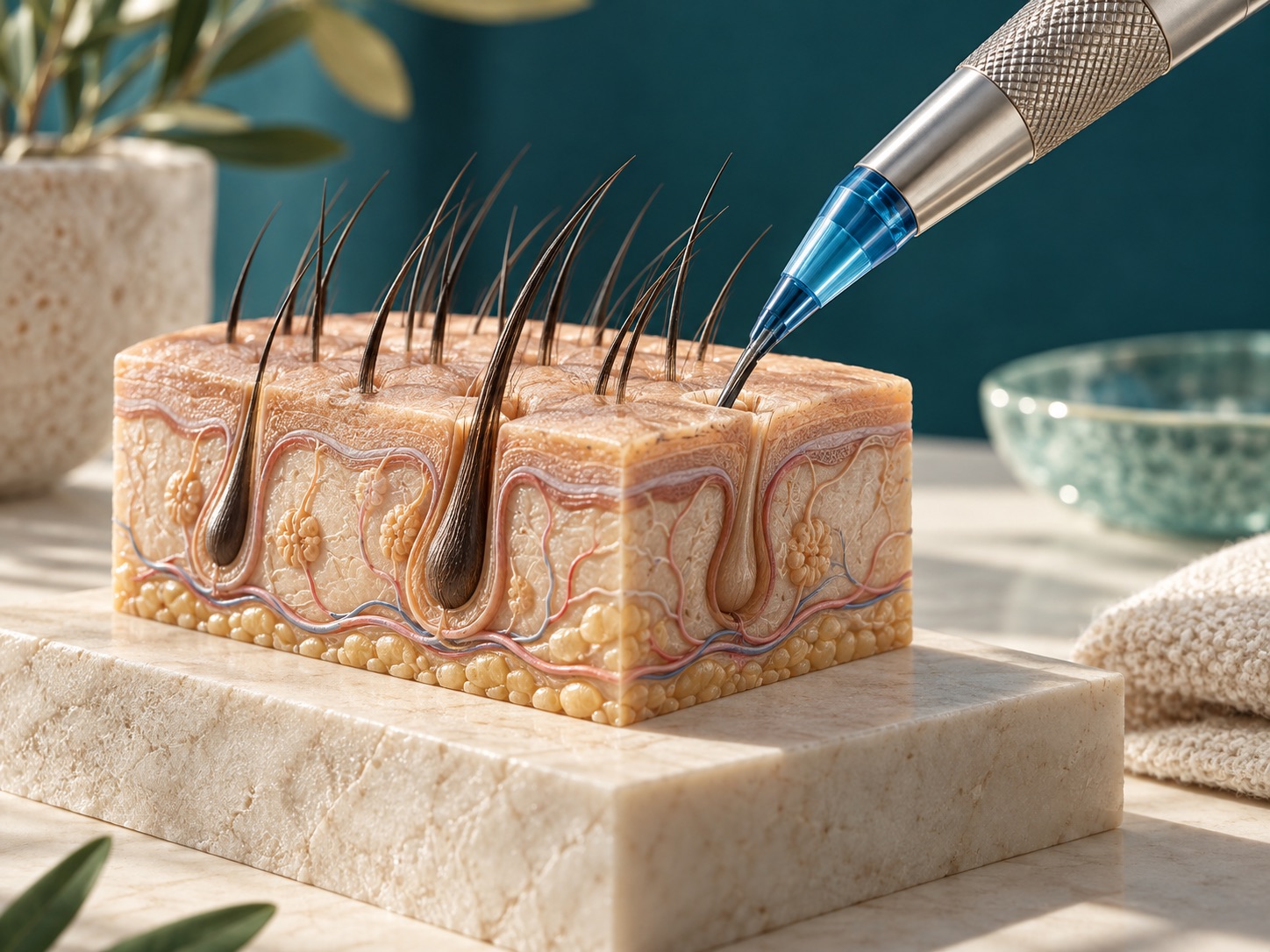
Sapphire FUE is a variation of the FUE technique. Follicles are extracted individually from the donor area, and the channels in the recipient area are opened with blades tipped with sapphire instead of steel.
Treatment overview
Sapphire blades can produce finer, more regular channels, which may support denser placement and smoother healing. The final result still depends mainly on graft quality, planning and the team's experience.
Common purposes
- Restoring the hairline and thinning areas
- Finer, more regular channel opening
- Denser graft placement where appropriate
- Smoother healing of the recipient area
Free consultation
Free consultation
No obligation. A coordinator replies personally.
Who may be suitable?
- Adults with stable, pattern hair loss
- People with an adequate donor area
- Those without active scalp disease
- People with realistic expectations
Suitability is always decided by a specialist after reviewing your health and examining you.
Treatment process
- 01
Before treatment
You share photos of the front, top, crown and donor area. Hair loss pattern and donor capacity are assessed; blood tests may be requested.
- 02
Treatment day
Under local anaesthesia, follicles are extracted, channels are opened with sapphire-tipped blades and grafts are placed. The procedure usually takes most of a day.
- 03
After treatment
Mild swelling and small crusts are common. The first wash and aftercare instructions are given in the clinic.
- 04
Follow-up
Progress is followed with photos over months. Medical treatment for ongoing hair loss may be discussed.
Expectations & recovery
Crusts usually shed within about 10–14 days.
Temporary shedding of transplanted hair is normal in the first weeks.
New growth typically starts at 3–4 months; the final result is assessed at 12–18 months.
Results and recovery vary from person to person. No outcome can be guaranteed.
Risks & considerations
Potential benefits
- Finer, more regular channels
- Potentially denser placement
- Smooth healing for many patients
- Uses your own hair
Risks & considerations
- Infection, bleeding, numbness and swelling
- Uneven growth or lower density than expected
- Donor area over-harvesting if poorly planned
- Native hair may continue to thin
Questions about this treatment
Independent patient resources
This information is general and does not replace a medical consultation.
Your Next Step Starts With a Conversation.
Speak with a patient coordinator — free and without obligation.
Free Consultation