
Hair Transplant
Eyebrow Transplant
Natural-looking brow restoration.
An eyebrow transplant moves individual hair follicles — usually fine hairs from the back of the scalp — to thin or bare eyebrow areas. Each hair is placed one by one at very flat angles to follow the natural brow direction.
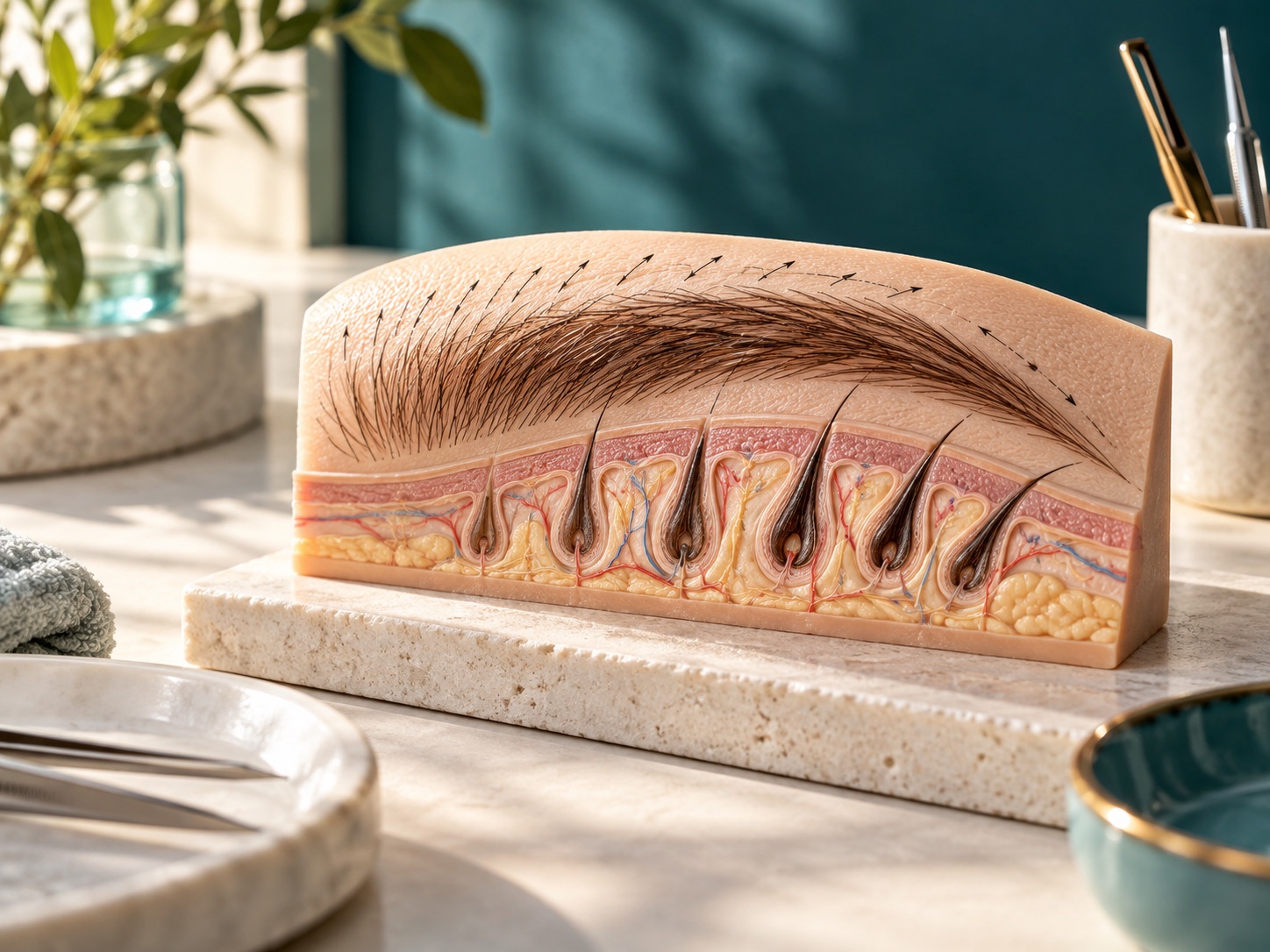
Treatment overview
Because transplanted hairs keep growing like scalp hair, they need regular trimming. The shape is designed with you before the procedure.
Common purposes
- Restoring brows thinned by over-plucking
- Filling gaps from scars or burns
- Reconstructing brows lost for medical reasons
- Improving brow shape and density
Free consultation
Free consultation
No obligation. A coordinator replies personally.
Who may be suitable?
- Adults with thin or patchy eyebrows
- People with an adequate donor area
- Those without active skin disease in the area
- People willing to trim the brows regularly
Suitability is always decided by a specialist after reviewing your health and examining you.
Treatment process
- 01
Before treatment
You share clear photos of your brows. The desired shape is discussed and the design is drawn with you before the procedure.
- 02
Treatment day
Under local anaesthesia, fine follicles are extracted and implanted one by one following the planned design. The procedure usually takes a few hours.
- 03
After treatment
Small crusts and redness are common in the first days. Touching and rubbing the area is restricted.
- 04
Follow-up
Progress is followed with photos. Transplanted hairs shed in the first weeks and regrow over the following months.
Expectations & recovery
Crusts usually shed within about 7–10 days.
Temporary shedding of transplanted hairs is normal.
New growth typically starts at 3–4 months; the final result is assessed around 12 months.
Results and recovery vary from person to person. No outcome can be guaranteed.
Risks & considerations
Potential benefits
- Natural-looking, permanent brows
- Designed to suit your face
- Can cover scars
- No daily makeup needed for density
Risks & considerations
- Infection, bleeding and swelling
- Uneven growth or the need for a touch-up
- Transplanted hairs grow long and need regular trimming
- Tiny dot scars in the donor area
Questions about this treatment
Independent patient resources
This information is general and does not replace a medical consultation.
Your Next Step Starts With a Conversation.
Speak with a patient coordinator — free and without obligation.
Free Consultation