
Plastic Surgery
Rhinoplasty
Reshaping the nose for balance and breathing comfort.
Rhinoplasty is surgery that changes the shape, size or proportions of the nose. It can address the bony upper part, the cartilage of the tip, or both, and may be combined with procedures that improve airflow, such as septoplasty.
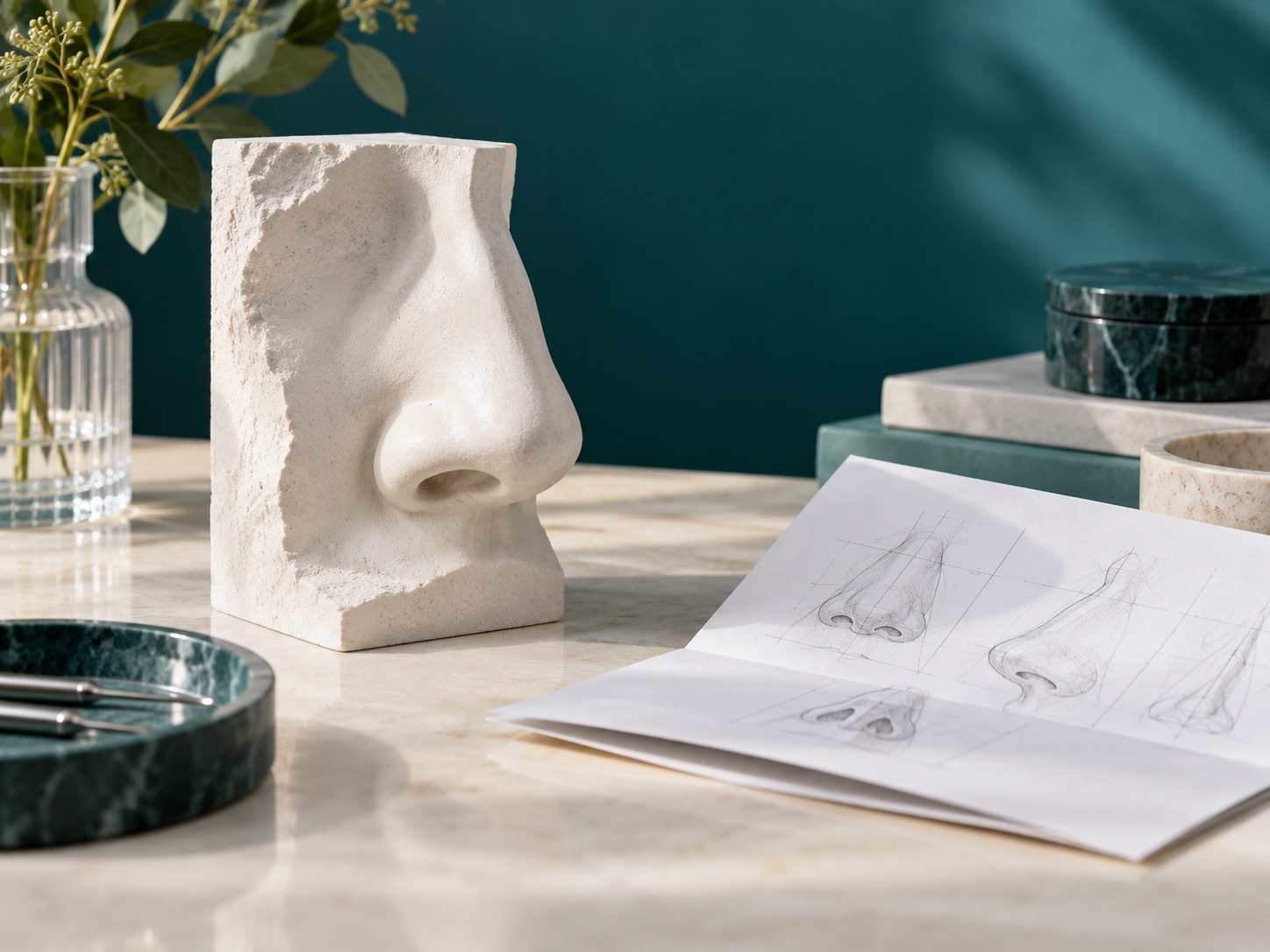
Treatment overview
Surgeons use either an open approach, with a small incision across the columella, or a closed approach with incisions inside the nostrils. The choice depends on the anatomy and the changes planned.
Common purposes
- Refining a dorsal hump or the width of the nose
- Reshaping or supporting the nasal tip
- Improving facial balance and profile
- Correcting breathing problems linked to the internal structure
- Revising the result of a previous nose surgery
Free consultation
Free consultation
No obligation. A coordinator replies personally.
Who may be suitable?
- Adults whose facial growth is complete
- People in good general health without uncontrolled medical conditions
- Non-smokers, or those able to stop before and after surgery as advised
- People with realistic, clearly described goals
Suitability is always decided by a specialist after reviewing your health and examining you.
Treatment process
- 01
Before treatment
You share photos and your medical history online. The surgeon reviews them, and an in-person examination of the nasal structure and breathing follows before any decision is made.
- 02
Treatment day
The operation is usually performed under general anaesthesia. The surgeon reshapes bone and cartilage according to the agreed plan and places a splint on the nose.
- 03
After treatment
Swelling and bruising around the eyes and nose are common in the first days. You will receive written instructions on sleeping position, cleaning and activity.
- 04
Follow-up
Splint and any stitches are removed at a check-up. The nose continues to settle for many months, so follow-up appointments are scheduled over time.
Expectations & recovery
Visible swelling decreases gradually, but subtle swelling — especially at the tip — can persist for a long period.
Strenuous exercise, contact sports and pressure from glasses are usually restricted for a time set by the surgeon.
Healing and the final result differ from person to person and depend on skin type and anatomy.
Results and recovery vary from person to person. No outcome can be guaranteed.
Risks & considerations
Potential benefits
- A nose more in proportion with the face
- Possible improvement of breathing when a structural cause is treated
- Results are generally long-lasting
Risks & considerations
- As with any surgery: bleeding, infection and anaesthesia-related risks
- Asymmetry, contour irregularities or dissatisfaction that may require revision
- Temporary or persistent changes in sensation or breathing
- Results cannot be guaranteed and are assessed only after swelling has resolved
Questions about this treatment
Independent patient resources
This information is general and does not replace a medical consultation.
Related treatments
- LiposuctionContouring areas of stubborn fat.
- Tummy TuckTightening the abdominal skin and muscles.
- Breast AugmentationEnhancing breast volume and shape.
- Breast LiftLifting and reshaping the breasts.
- Breast ReductionReducing breast size for comfort and proportion.
- Brazilian Butt LiftShaping the buttocks with your own fat.
Your Next Step Starts With a Conversation.
Speak with a patient coordinator — free and without obligation.
Free Consultation