
Plastic Surgery
Ear Surgery (Otoplasty)
Setting prominent ears closer to the head.
Otoplasty reshapes the ear cartilage to bring prominent ears closer to the head or to create a missing natural fold. It can also correct asymmetry between the ears.
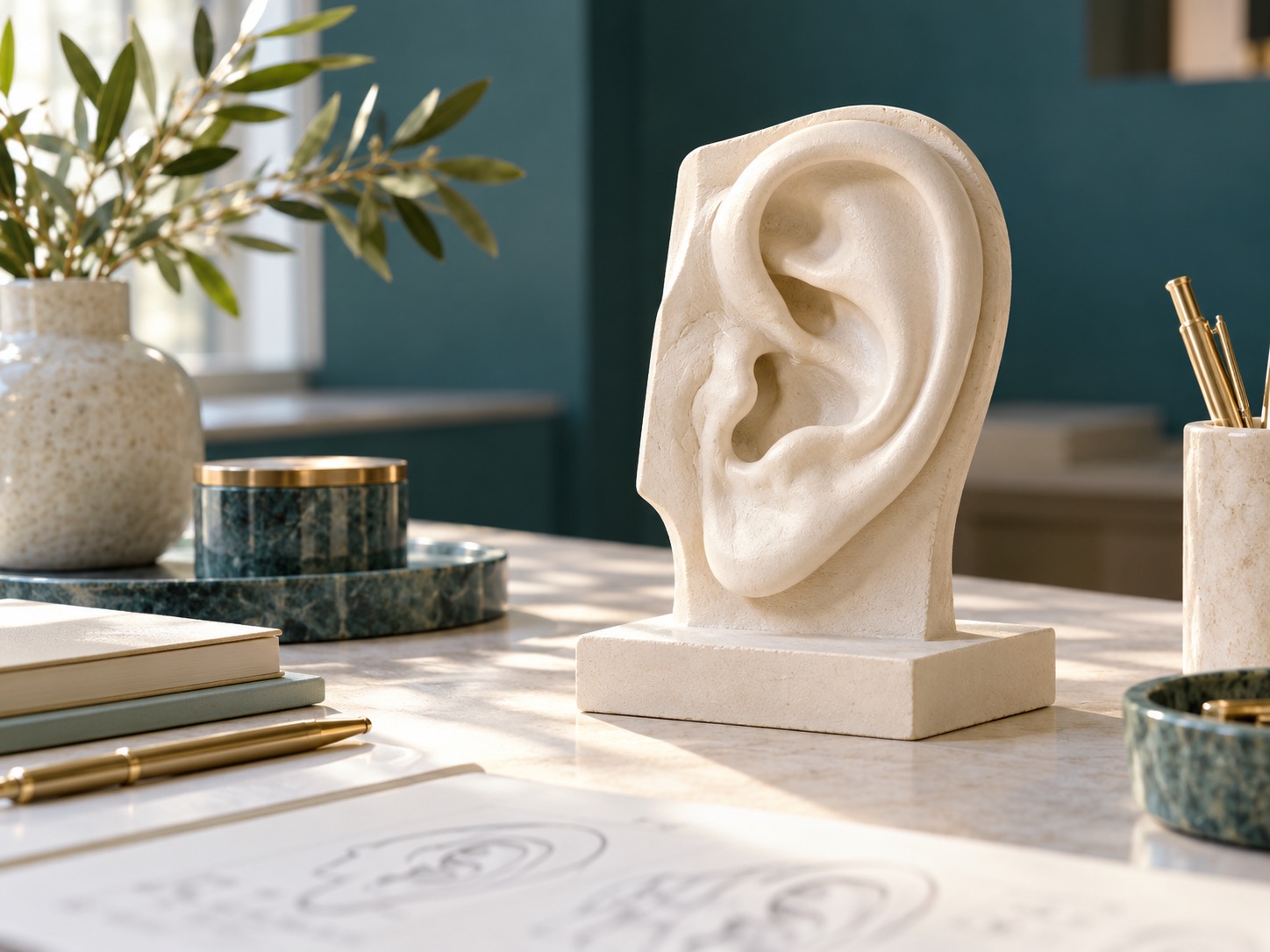
Treatment overview
The procedure changes the shape and position of the outer ear; it does not affect hearing.
Common purposes
- Ears that stand out from the head
- An underdeveloped ear fold
- Asymmetry between the ears
- Correction of a previous ear surgery
Free consultation
Free consultation
No obligation. A coordinator replies personally.
Who may be suitable?
- Children once the ears are nearly fully grown, usually from around school age
- Teenagers and adults in good health
- Patients who themselves wish to have the change
- People with realistic expectations
Suitability is always decided by a specialist after reviewing your health and examining you.
Treatment process
- 01
Before treatment
Front and side photos of the ears are reviewed with your medical history. The ear structure is examined in person and the plan confirmed.
- 02
Treatment day
Adults are usually treated under local anaesthesia; children often under general anaesthesia. Through an incision behind the ear the cartilage is reshaped and secured with stitches.
- 03
After treatment
A head bandage protects the ears at first, followed by a headband worn as advised, especially at night.
- 04
Follow-up
The wound is checked before you travel and the healing of the incision is followed up remotely.
Expectations & recovery
Tenderness and swelling are common for the first weeks.
Contact sports and pressure on the ears are avoided for a period set by your surgeon.
The scar is hidden behind the ear in most cases.
Results and recovery vary from person to person. No outcome can be guaranteed.
Risks & considerations
Potential benefits
- Ears that sit in better proportion to the head
- A scar usually concealed in the natural crease behind the ear
- Results that are generally long-lasting
Risks & considerations
- Bleeding, infection and rarely cartilage inflammation
- Asymmetry or recurrence of prominence
- Visible or thickened scarring
- Temporary numbness or sensitivity to cold
Questions about this treatment
Independent patient resources
This information is general and does not replace a medical consultation.
Related treatments
- RhinoplastyReshaping the nose for balance and breathing comfort.
- LiposuctionContouring areas of stubborn fat.
- Tummy TuckTightening the abdominal skin and muscles.
- Breast AugmentationEnhancing breast volume and shape.
- Breast LiftLifting and reshaping the breasts.
- Breast ReductionReducing breast size for comfort and proportion.
Your Next Step Starts With a Conversation.
Speak with a patient coordinator — free and without obligation.
Free Consultation