
Dental
Teeth Whitening
Brightening the natural colour of your teeth.
Professional teeth whitening lightens the natural colour of teeth using a peroxide-based gel, applied in the clinic or with custom trays at home under professional guidance. It works on natural enamel — crowns, veneers and fillings do not change colour.
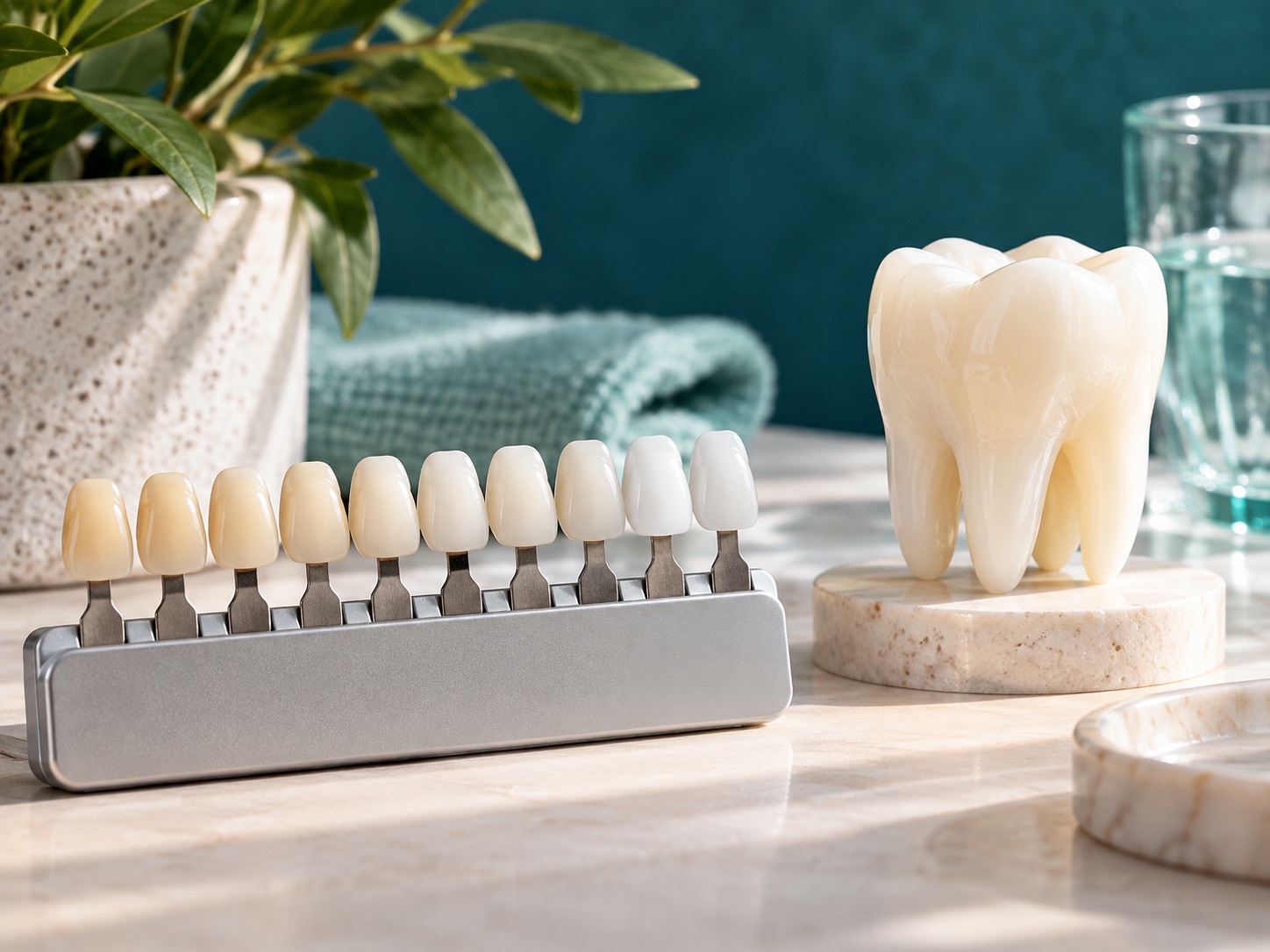
Treatment overview
Whitening is one of the most conservative aesthetic dental treatments, but it is not suitable for everyone. Decay, gum disease and exposed roots should be treated first, and some types of discolouration respond poorly to bleaching.
Common purposes
- Lightening yellowing or staining from coffee, tea or smoking
- Refreshing the smile before an event
- Complementing other aesthetic treatments
- A conservative first step before considering veneers
Free consultation
Free consultation
No obligation. A coordinator replies personally.
Who may be suitable?
- Adults with healthy teeth and gums
- People without untreated decay or gum disease
- Those whose discolouration responds to bleaching
- People who understand restorations will not whiten
Suitability is always decided by a specialist after reviewing your health and examining you.
Treatment process
- 01
Before treatment
Your teeth and gums are examined to confirm whitening is safe for you. Existing crowns or fillings in the smile zone are noted, since they will keep their current colour.
- 02
Treatment day
In-clinic whitening takes about an hour: the gums are protected and the gel is applied in cycles, sometimes with light activation. Home options use custom trays worn for a set period.
- 03
After treatment
Temporary sensitivity to cold is the most common effect and usually settles within days. A 'white diet' — avoiding strongly coloured food and drink — is advised for the first days.
- 04
Follow-up
Results fade gradually with diet and habits. Top-up treatments with home trays can maintain the shade.
Expectations & recovery
No downtime; normal life continues immediately.
Sensitivity usually resolves within a few days.
Avoiding staining foods and smoking helps the result last.
Results and recovery vary from person to person. No outcome can be guaranteed.
Risks & considerations
Potential benefits
- Conservative — no tooth tissue is removed
- Noticeable brightening in a single visit
- Can be repeated or maintained at home
- Often the simplest way to refresh a smile
Risks & considerations
- Temporary tooth sensitivity and gum irritation
- Does not work on crowns, veneers or fillings
- Some internal discolouration responds poorly
- Results fade over time and depend on diet and habits
Questions about this treatment
Independent patient resources
This information is general and does not replace a medical consultation.
Related treatments
Your Next Step Starts With a Conversation.
Speak with a patient coordinator — free and without obligation.
Free Consultation