
Dental
Dental Crowns
Restoring and protecting damaged teeth.
A dental crown is a cap that covers the whole visible part of a tooth, restoring its shape, strength and appearance. Crowns can be made from zirconia, lithium disilicate (e-max), porcelain fused to metal or other materials, chosen according to the tooth's position and the forces it carries.
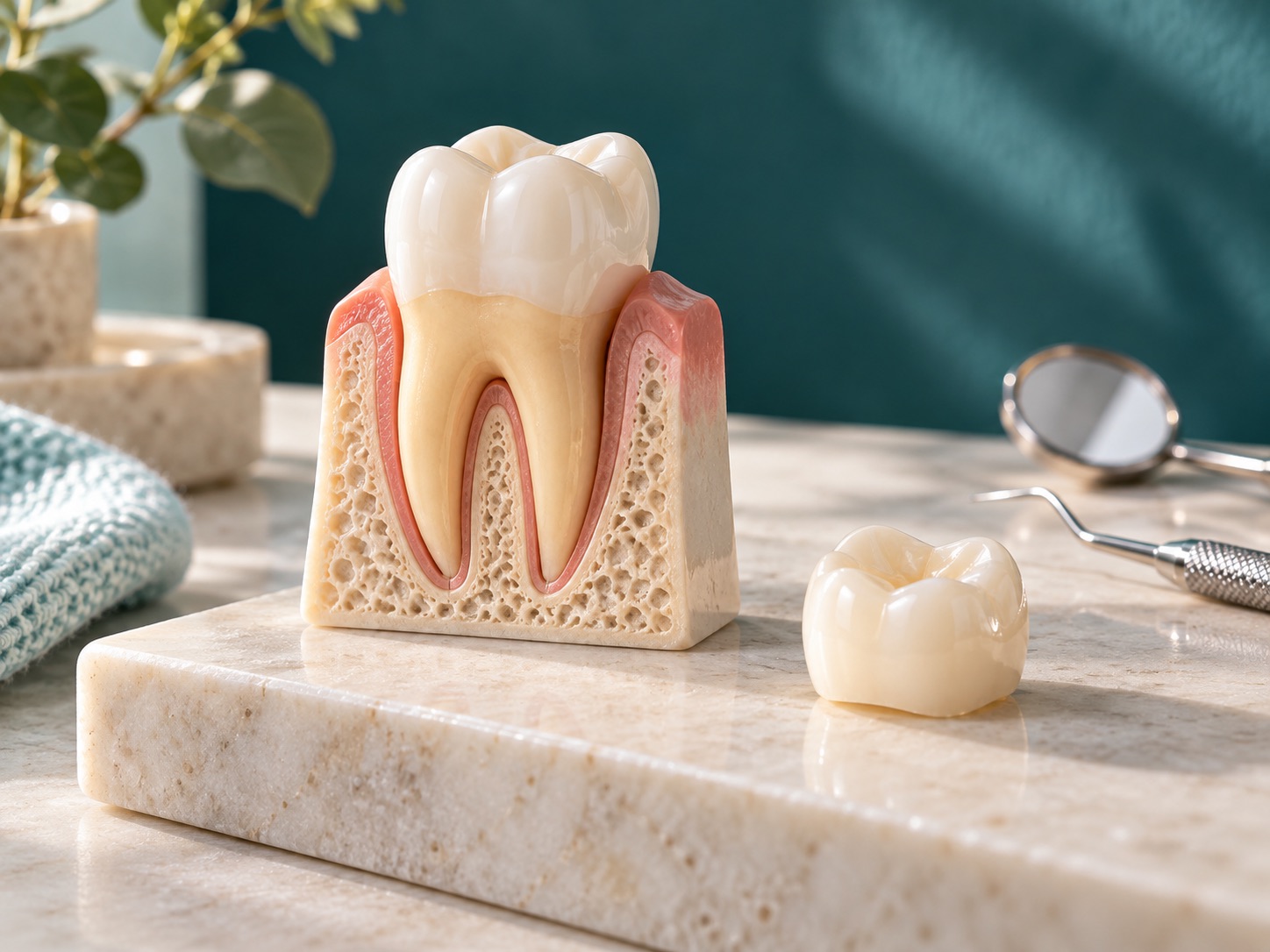
Treatment overview
A crown is usually recommended when a tooth is too damaged for a filling — after a fracture, large decay or root canal treatment. The aim is to keep your natural tooth in function for as long as possible.
Common purposes
- Protecting a cracked or weakened tooth
- Restoring a tooth after root canal treatment
- Replacing a large, failing filling
- Covering a dental implant
Free consultation
Free consultation
No obligation. A coordinator replies personally.
Who may be suitable?
- Adults with a tooth too damaged for a filling
- People with a healthy root and supporting bone
- Those with healthy gums or gums treated beforehand
- People able to keep up good daily oral hygiene
Suitability is always decided by a specialist after reviewing your health and examining you.
Treatment process
- 01
Before treatment
You share photos and recent X-rays. In the clinic the tooth and its root are examined, and the material, shade and shape are agreed with you.
- 02
Treatment day
Under local anaesthesia the tooth is shaped and a scan or impression is taken. A temporary crown protects it until the laboratory crown is ready.
- 03
After treatment
Mild sensitivity is common with the temporary. The final crown is checked for fit and bite, then cemented.
- 04
Follow-up
Regular check-ups monitor the crown edge and gum. A night guard is advised if you grind your teeth.
Expectations & recovery
Normal eating usually resumes after cementation.
Sensitivity typically settles within days to weeks.
Careful cleaning along the gum line prevents decay at the crown edge.
Results and recovery vary from person to person. No outcome can be guaranteed.
Risks & considerations
Potential benefits
- Keeps the natural tooth in function
- Restores strength and shape
- Natural-looking options for visible teeth
- Long service life with good care
Risks & considerations
- Tooth preparation is irreversible
- The tooth may later need root canal treatment
- Decay can develop at the crown edge without good hygiene
- Crowns may chip or need replacement after years
Questions about this treatment
Independent patient resources
This information is general and does not replace a medical consultation.
Related treatments
Your Next Step Starts With a Conversation.
Speak with a patient coordinator — free and without obligation.
Free Consultation