
Dental
Dental Implants
Replacing missing teeth with implant roots.
A dental implant is a small titanium or zirconia post placed in the jawbone to act as an artificial tooth root. Once it has integrated with the bone, a crown, bridge or denture is attached to it.
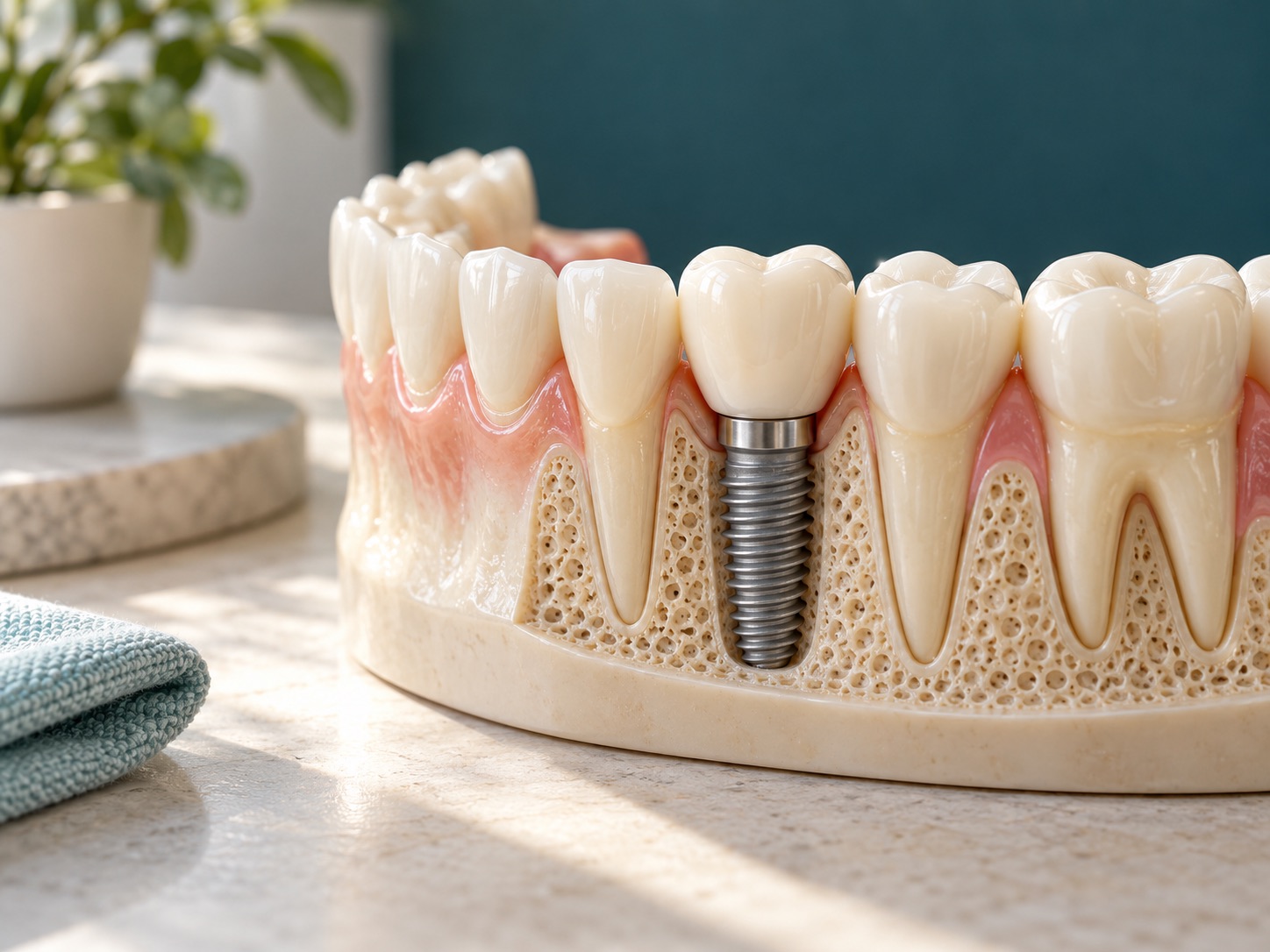
Treatment overview
Implants can replace a single tooth, several teeth or support a full arch. Planning is based on X-rays or 3D imaging of the bone and the condition of the remaining teeth and gums.
Common purposes
- Replacing one or more missing teeth
- Providing a fixed alternative to removable dentures
- Supporting chewing function and speech
- Helping preserve the jawbone in the area of a missing tooth
Free consultation
Free consultation
No obligation. A coordinator replies personally.
Who may be suitable?
- Adults with sufficient jawbone, or who can have bone augmentation if needed
- Healthy gums, or gum disease treated beforehand
- Good oral hygiene and commitment to regular check-ups
- Conditions such as uncontrolled diabetes or heavy smoking require additional evaluation
Suitability is always decided by a specialist after reviewing your health and examining you.
Treatment process
- 01
Before treatment
The dentist examines your mouth and reviews imaging to assess bone volume and plan the implant position. Extractions or bone grafting may be planned first.
- 02
Treatment day
The implant is placed under local anaesthesia. Depending on the case, a temporary tooth may be fitted or the area left to heal.
- 03
After treatment
Mild swelling or discomfort is common for a few days. You receive instructions on diet, cleaning and medication.
- 04
Follow-up
After the bone has integrated with the implant, the final restoration is made and fitted. Treatment may therefore require more than one visit.
Expectations & recovery
The integration period varies according to bone quality and the treatment plan.
Soft foods are usually advised in the early days.
Long-term success depends on oral hygiene and regular professional care.
Results and recovery vary from person to person. No outcome can be guaranteed.
Risks & considerations
Potential benefits
- A stable, fixed replacement that looks and functions like a natural tooth
- Adjacent healthy teeth do not need to be reduced, unlike a conventional bridge
- Can support dentures for improved stability
Risks & considerations
- Surgical risks such as infection, nerve irritation or sinus involvement in the upper jaw
- An implant may fail to integrate and need to be replaced
- Peri-implantitis (inflammation around the implant) can develop without good hygiene
- Multiple visits may be needed, which is relevant for travel planning
Questions about this treatment
Independent patient resources
This information is general and does not replace a medical consultation.
Related treatments
Your Next Step Starts With a Conversation.
Speak with a patient coordinator — free and without obligation.
Free Consultation