
Hair Transplant
Women's Hair Transplant
Approaches tailored to female hair loss.
Hair transplantation in women requires a different approach from men. Female hair loss is often diffuse rather than patterned, so the cause must be assessed first — hormonal, nutritional or other treatable causes should be addressed before surgery is considered.
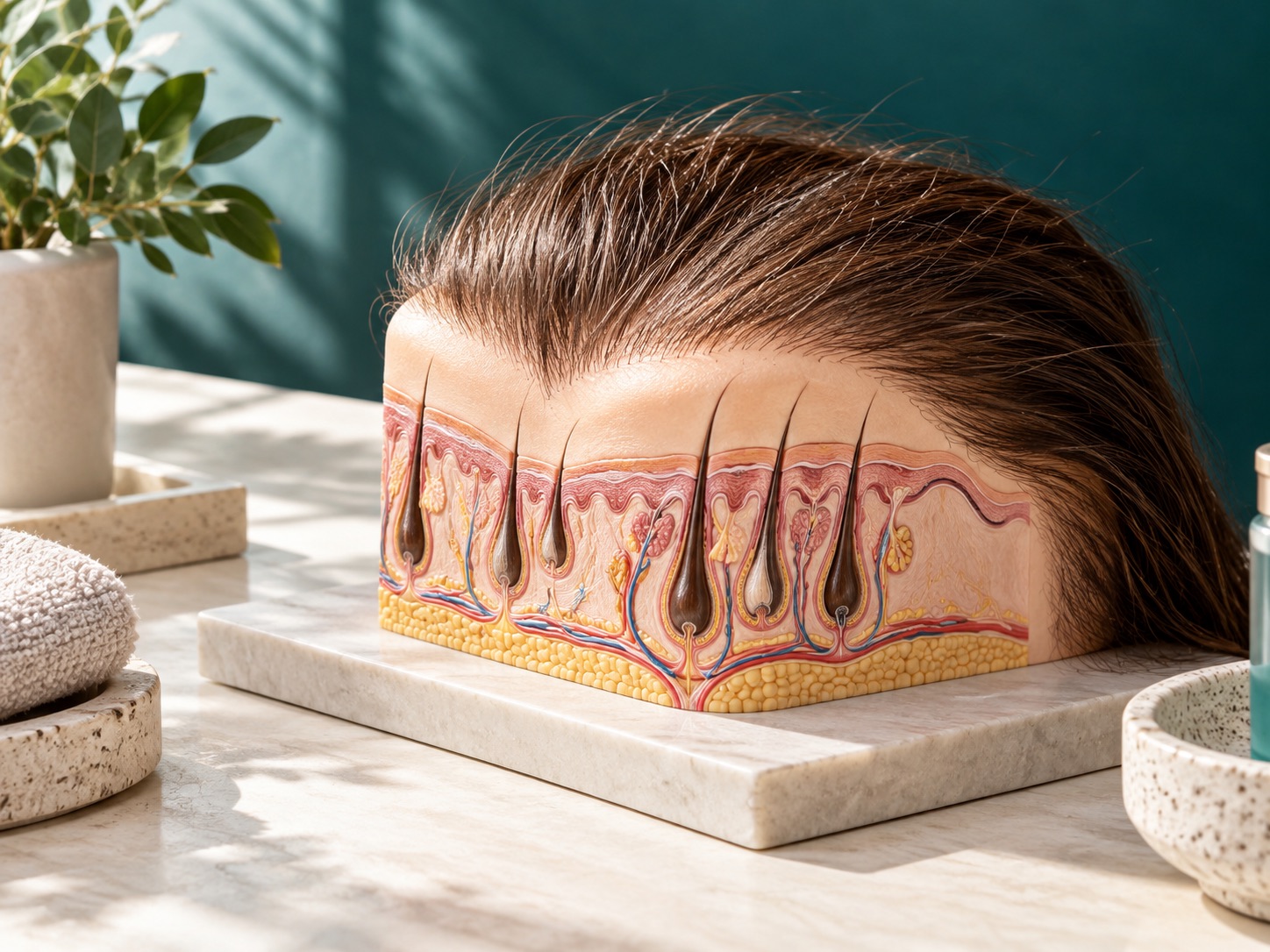
Treatment overview
When transplantation is suitable, unshaven or partially shaven techniques are often preferred so the procedure stays discreet. Density expectations should be discussed honestly, since diffuse thinning limits how much can be added.
Common purposes
- Restoring a receding or high hairline
- Adding density to a widening parting
- Camouflaging scars
- Correcting traction damage from tight hairstyles
Free consultation
Free consultation
No obligation. A coordinator replies personally.
Who may be suitable?
- Women with stable, assessed hair loss
- Those whose treatable causes have been ruled out or managed
- People with an adequate donor area
- Those with realistic expectations about density
Suitability is always decided by a specialist after reviewing your health and examining you.
Treatment process
- 01
Before treatment
You share photos of your hairline, parting and donor area. Blood tests for hormonal and nutritional causes are often requested before planning.
- 02
Treatment day
Under local anaesthesia, follicles are extracted and implanted, usually with unshaven or partially shaven techniques. The procedure takes several hours.
- 03
After treatment
Mild swelling and small crusts are common. Existing hair usually covers the area during early healing.
- 04
Follow-up
Progress is followed with photos. Medical treatment to protect native hair may be discussed.
Expectations & recovery
Crusts usually shed within about 10–14 days.
Temporary shedding — of transplanted and sometimes native hair — can occur in the first weeks.
New growth typically starts at 3–4 months; the final result is assessed at 12–18 months.
Results and recovery vary from person to person. No outcome can be guaranteed.
Risks & considerations
Potential benefits
- Discreet options without full shaving
- Permanent improvement in suitable areas
- Designed around female hairline aesthetics
- Uses your own hair
Risks & considerations
- Diffuse thinning may limit achievable density
- Underlying causes must be managed or results can fade
- Temporary shedding of native hair is possible
- Infection, bleeding and swelling
Questions about this treatment
Independent patient resources
This information is general and does not replace a medical consultation.
Your Next Step Starts With a Conversation.
Speak with a patient coordinator — free and without obligation.
Free Consultation